Understand your money better
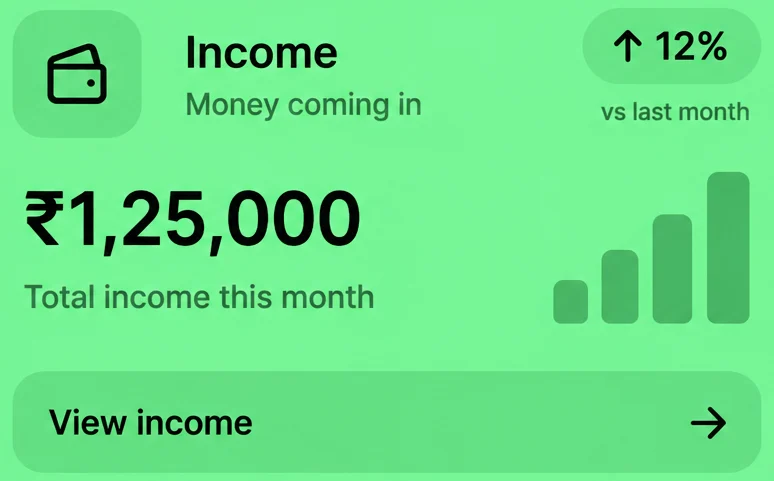
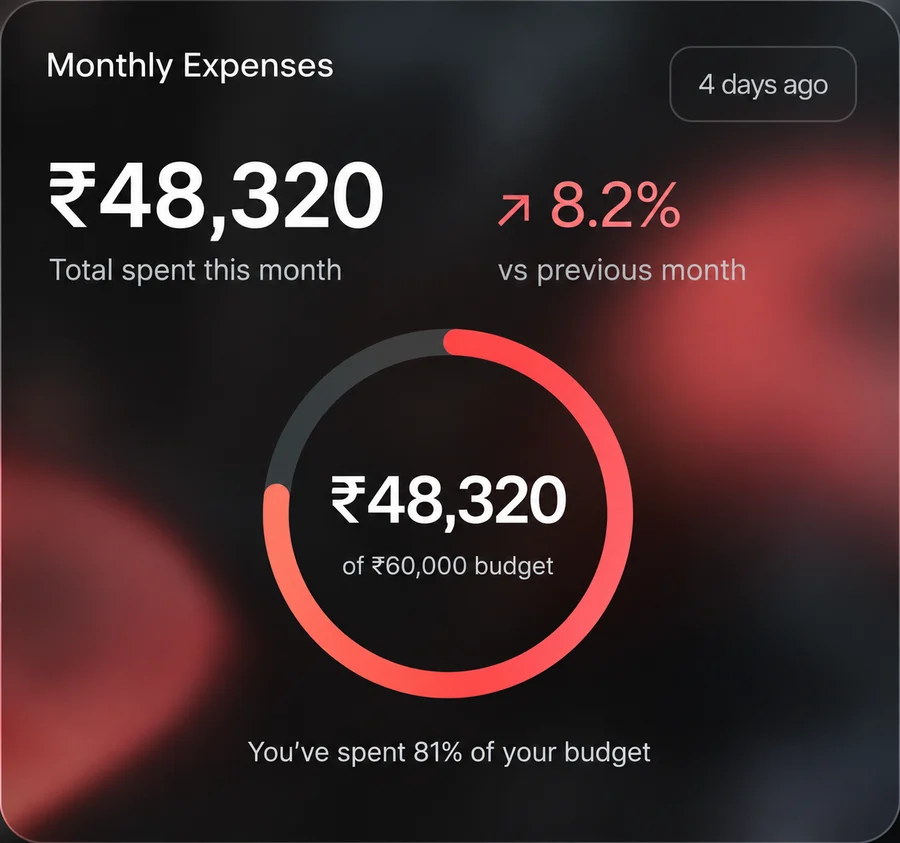
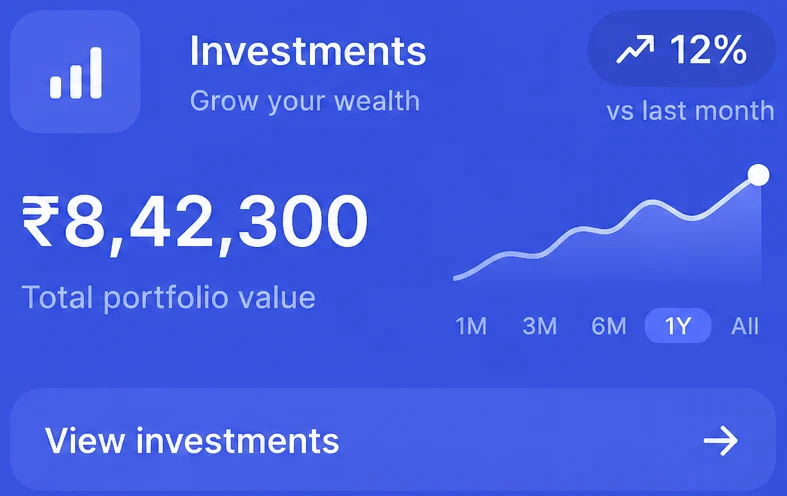
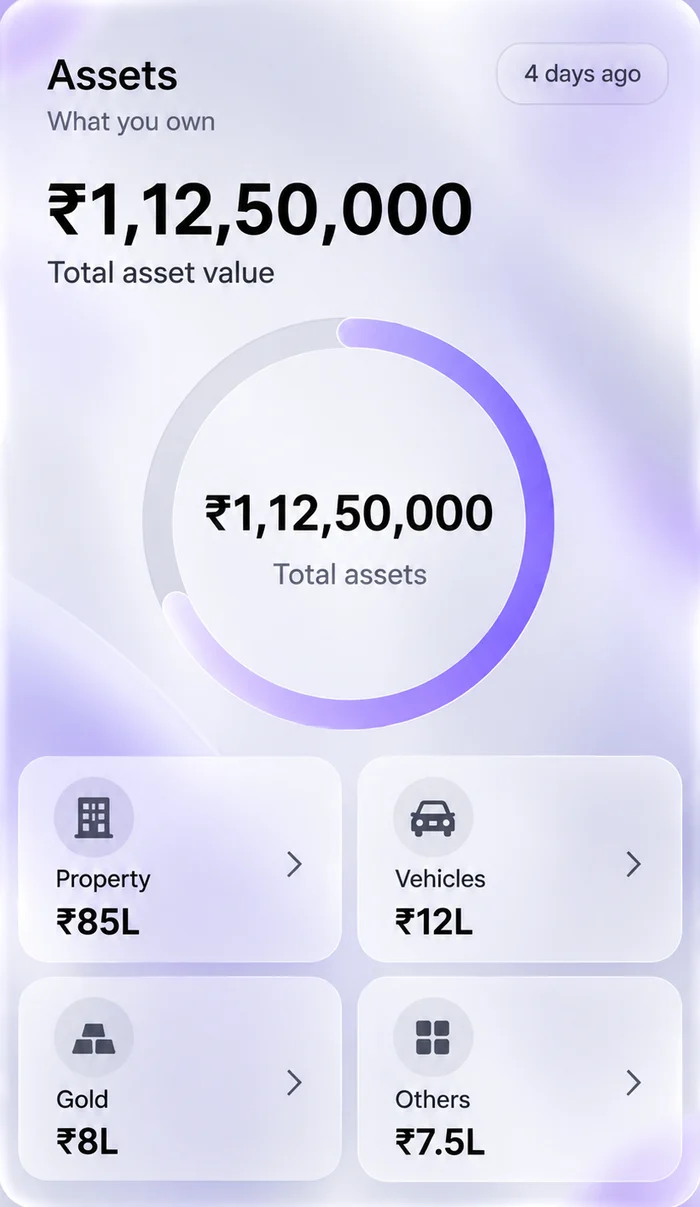
Get a clear view of your finances across investments, spending and savings, all in one place.
Invest, track and plan in one place.
Get clear, personalized answers about your money, grounded in your financial data in seconds.
Get a clear view of your finances across investments, spending and savings, all in one place.
Get timely updates on your investments, markets and personal finances, so you can nevver miss what matters.
Nifty crosses 25,000 for the first time
New tax regime changes explained in simple words
Why large cap funds are in focus again
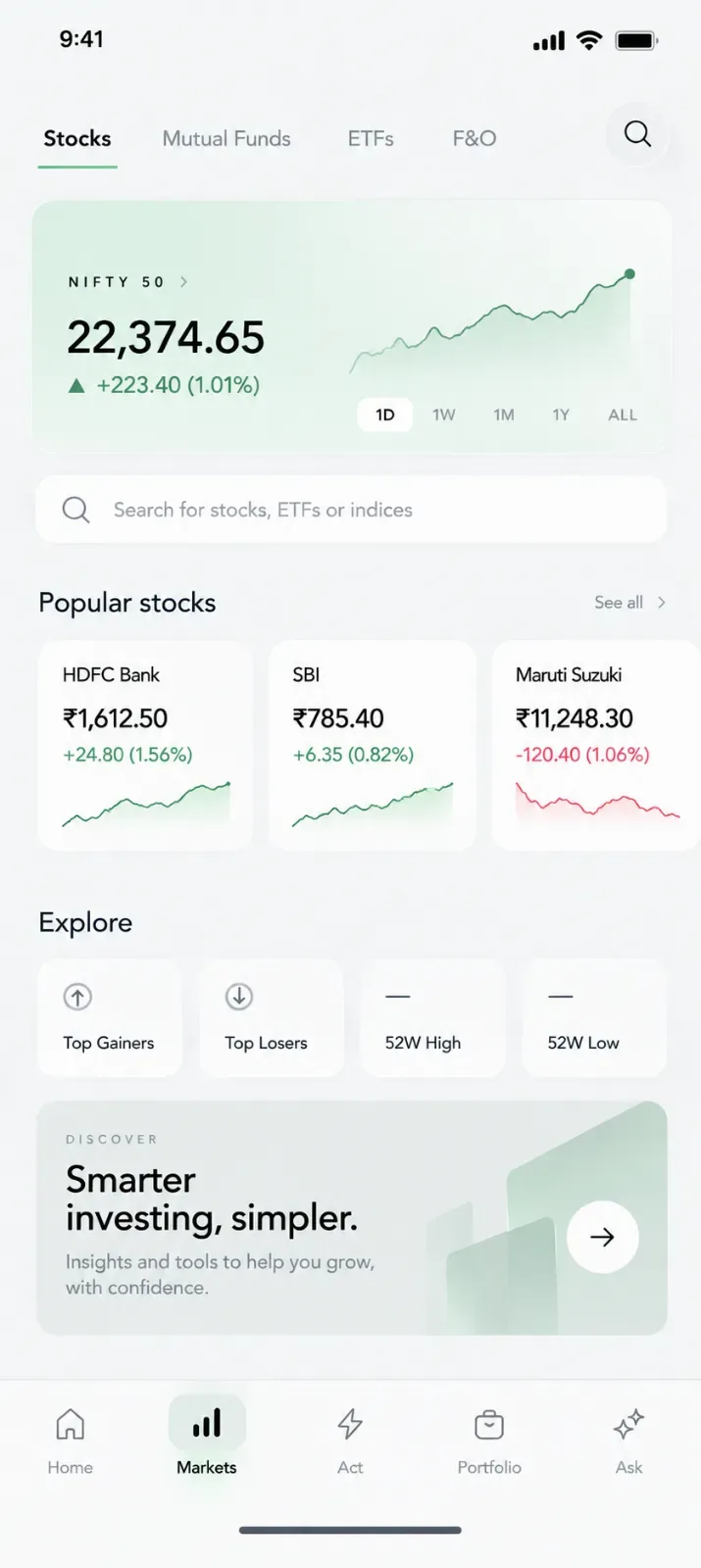
HDFC Bank
HDFCBANK
SBI
SBIN
Maruti Suzuki
MARUTI
Investment amount
₹ 500
Start small. Build big.
Invest broader
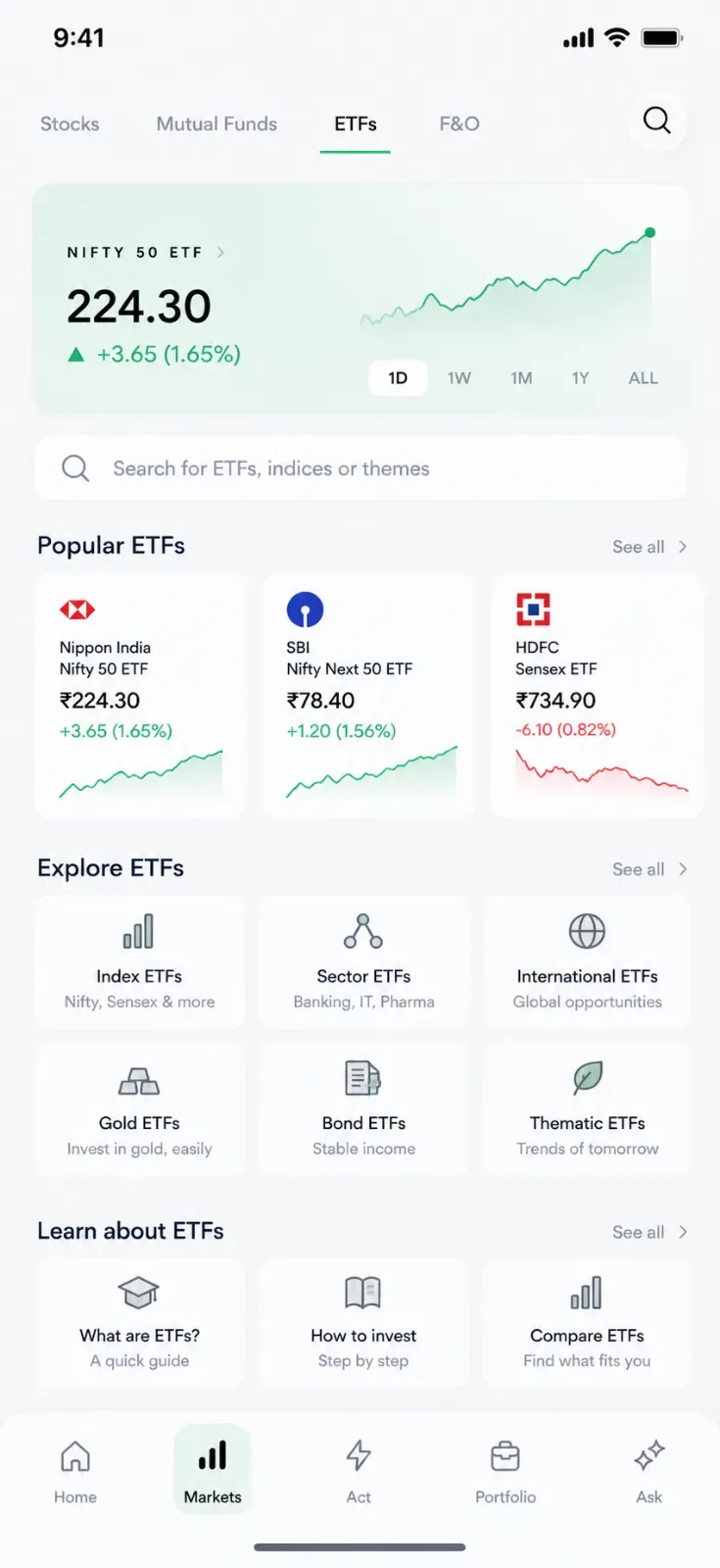
Get exposure to top indices, sectors and themes, all in one place.


stocks
The market moves every day. See what’s changing, understand what matters, and invest with more clarity.
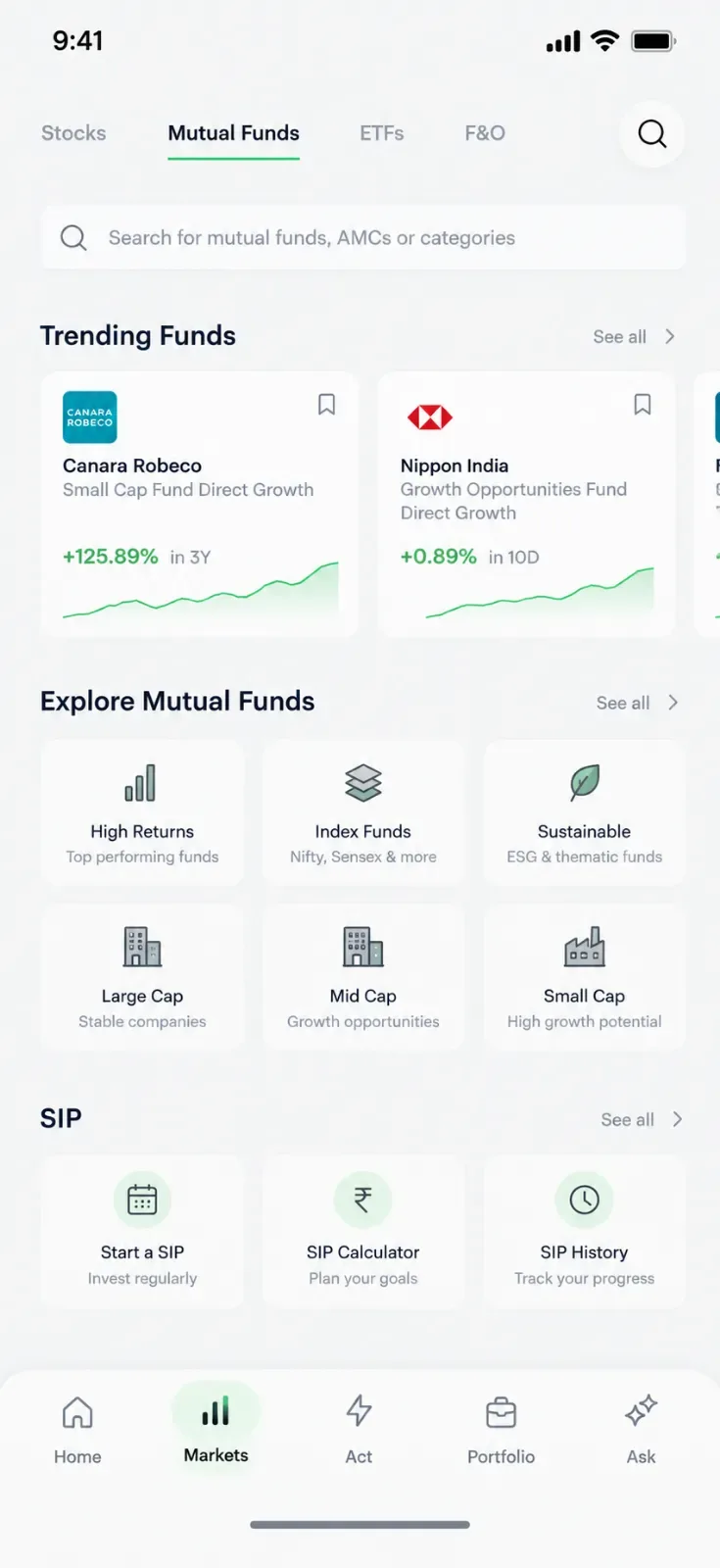
mutual fund
Small amounts can grow into something meaningful. Build steadily, spread your investments, and let time do the heavy lifting.
ETF
Invest across a basket of assets. Build diversification in one place, and keep investing simple.
Model scenarios from market shifts to life goals, and see how your money could grow over time.


The Mukhyamantri Majhi Ladki Bahin Yojana provides eligible women in Maharashtra a stated monthly benefit of Rs 1,500 through direct bank transfer.
Read the analysisE-invoicing under GST is mandatory for registered businesses whose aggregate turnover exceeded Rs 5 crore in any year since 2017-18, with each B2B invoice reported to the Invoice Registration Portal for an IRN and QR code and a 30-day reporting limit for turnover of Rs 10 crore or more. Covers applicability and exemptions, the time limit with date examples, how the process works, IRN vs invoice number, 24-hour cancellation, the Section 122 penalty and ITC impact, common rejection errors and e-invoice vs e-way bill. 21 FAQs.
Read the analysisCSR under Section 135 applies when a company meets any one of the Rs 500 crore net worth, Rs 1,000 crore turnover or Rs 5 crore net profit tests. Covers the 2% spending rule, eligible activities, unspent amounts, Form CSR-1 and CSR-2, Board duties and penalties.
Read the analysisEPFO lets members withdraw PF online through the Member e-Sewa portal using UAN and Aadhaar OTP, with no employer approval needed for most claims. Covers the EPF Scheme 2026 (effective June 29, 2026, replacing the 1952 scheme: 3 consolidated withdrawal categories, 25% minimum balance retention, 3-working-day settlement target, 36-month EPS pension waiting period), 8-step online withdrawal, a dedicated PF claim status check walkthrough, UMANG app withdrawal, offline Composite Claim Forms, full vs partial withdrawal limits and forms (19/31/10C/10D/20), EPFO 3.0 ATM and UPI withdrawal with the new Rs 5 lakh auto-settlement limit, common claim rejection reasons, and taxability. 21 FAQs, official links only.
Read the analysisSection 44ADA lets a specified professional declare 50% of gross receipts as taxable income with no books of account and no tax audit, up to Rs 50 lakh of receipts or Rs 75 lakh when cash receipts are 5% or less. Covers who can opt, eligible professions, the cash test, how income is calculated, three worked examples with tax, Section 44AD vs 44ADA, deductions and the tax regime, audit rules, advance tax, ITR-4 filing, opting out and the Income-tax Act 2025. 22 FAQs.
Read the analysisSection 54 exempts the long-term capital gain on the sale of a residential house when the gain is invested in another house in India, at the lower of the gain and the cost of the new house, capped at Rs 10 crore. Covers who can claim, conditions, the 1 year before, 2 years after and 3 year construction windows, four worked examples with tax recomputed, the once-in-a-lifetime two-house option, NRI rules, the Capital Gains Account Scheme, withdrawal of the exemption, Section 54 vs 54F vs 54EC and how to claim. 21 FAQs.
Read the analysisLeave Travel Allowance can reduce taxable salary when an employee takes an eligible trip within India. Covers fare ceilings by transport mode, eligible costs, the 2026-29 block, carry-forward, worked examples, documents, Form 16 and ITR claims, taxability and the new regime. 28 FAQs.
Read the analysisAn e-way bill records the movement of goods under GST. Covers the Rs 50,000 threshold, intrastate state variations, who generates Form GST EWB-01, Part A and Part B, documents, validity by distance, exemptions, penalties, recent GSTN updates, portal login and generation steps. 17 FAQs.
Read the analysisResidential status under Section 6 decides how much of your income India taxes: you are a resident with 182 days in India, or 60 days plus 365 days in the 4 earlier years. Covers the 120 day rule for citizens with Indian income above Rs 15 lakh, the deemed resident rule, ROR vs RNOR vs NRI, how to count days, taxability by status, five worked examples, HUF and company residence, FEMA vs income tax, and the Income-tax Act 2025. 22 FAQs.
Read the analysisGSTR-9 is the annual GST return, mandatory above Rs 2 crore of aggregate turnover, and the due date for FY 2025-26 is 31 December 2026. Covers who must file, GSTR-9, 9A, 9B and 9C, the 6 parts and 19 tables, reconciliation before filing, step by step filing on the GST portal, the late fee slabs by turnover with worked examples, interest, common mistakes and the 3 year filing limit. 24 FAQs.
Read the analysis